
The function of an electrical connector may seem straightforward: it transmits power or signals (or both) to electronic devices while ensuring a stable and reliable connection. Whether it is a standard connector or a custom-made variant, the manufacturing materials play a critical role in determining the product’s reliability and electrical performance. Yet, this key factor is often overlooked during the system-level design phase. When executing their work, designers typically need to balance multiple requirements including reliability, cost, form factor, and environmental adaptability. The material selection insights shared in this guide will provide a practical reference for designers to choose suitable connector materials.
Plastic Material Selection for Low-Cost Connectors
A wide range of plastic materials can be used to manufacture various types of electrical connectors, catering to both the production of standard off-the-shelf products and custom-designed connectors. During wire harness design, it is often necessary to configure dedicated custom mating connectors. Such connectors can be produced by external manufacturers, who will select optimal solutions from their existing pool of proven design resources to create high-reliability custom wire harness components.
The plastic materials available for manufacturing connector housings are listed below:
Traditional Base Materials: Polybutylene Terephthalate (PBT), Liquid Crystal Polymer (LCP), Thermoplastic Polyurethane (TPU), Nylon 66, 6T or 9T Special Nylon, Polyamide, Polycarbonate (PC), Polyvinyl Chloride (PVC), Acrylonitrile-Butadiene-Styrene Copolymer (ABS), Polyurethane (PUR), Polysulfone (PSU), Polytetrafluoroethylene (PTFE)
2025 New-Generation Materials: Chemically Recycled Polyamide (e.g., BASF Ultramid® Ccycled®), Halogen-Free Flame-Retardant Polyphthalamide (PPA, suitable for 800V high-voltage applications), Biodegradable Plastics (PLA, PHA), High-Purity Recycled PET, Plant-Filler Reinforced Composite Materials
If cost control is the primary objective for custom connectors, the aforementioned traditional plastic materials are undoubtedly the optimal choice. In sectors with stringent requirements for both environmental performance and product quality, such as new energy vehicles and consumer electronics, chemically recycled polyamide and halogen-free flame-retardant PPA have become mainstream material options. While retaining the performance of virgin materials, these eco-friendly alternatives can significantly reduce carbon emissions and lower the risk of electrical corrosion on metal contacts.
It is important to note that the low-cost plastic custom connector solutions described above are only suitable for mass production scenarios—where connector housings can be manufactured in bulk via injection molding processes. For small-batch production, it is recommended to use off-the-shelf plastic connectors; custom manufacturing via injection molding would incur prohibitively high costs in such cases. However, with the continuous advancement of 3D printing technology in 2025, custom mating connectors can be fabricated using high-performance plastic filaments through 3D printing, to match the assembly requirements of off-the-shelf crimp terminals. This approach is particularly well-suited for the low-cost manufacturing of products such as small and medium-sized UAVs in the low-altitude economy sector.
Metal Material Selection Strategy for Harsh-Environment Resistant Connectors
Ruggedized connectors designed for harsh environments feature housings and pins primarily made of metal materials, with internal insulation components fabricated from high-strength plastics. Metal materials offer excellent resistance to mechanical shock, high temperatures, thermal stress, tensile torsion, and vibration. They can also be integrated with practical features such as foolproof positioning and locking mechanisms, ensuring precise mating of the connector every time and preventing accidental disconnection. In 2025, metal material selection is characterized by two prominent trends: accelerated lightweight substitution, and mass production of specialized alloys tailored for extreme environments. These trends aim to meet the growing demand in high-end sectors such as automotive and aerospace, where the global automotive connector market is projected to reach a size of USD 19.452 billion.
Among various metal materials, stainless steel remains a widely used option in the electrical connector industry due to its dual advantages of low cost and high mechanical strength. Housings for custom connectors or cable assemblies can all be manufactured through casting or CNC machining processes. Most of these metal-housed connectors are panel-mounted devices, capable of meeting the stringent corrosion resistance requirements of applications such as marine shore power systems and industrial control equipment. High-grade stainless steel variants can achieve a salt spray corrosion resistance lifespan of over 10,000 hours.
Some may question: aluminum alloy offers lower cost and a higher strength-to-weight ratio, so why has it not been widely adopted in ruggedized connectors? The core reason lies in the difference in corrosion resistance: stainless steel far outperforms aluminum alloy in this aspect. Nevertheless, in 2025, surface-ceramicized aluminum alloy has entered mass production. A dense ceramic layer is formed on the aluminum alloy surface through specialized processes, enabling it to achieve corrosion resistance comparable to stainless steel while being 35% lighter. This advanced material has now been successfully applied in products such as high-voltage connectors for new energy vehicles and power system connectors for UAVs.
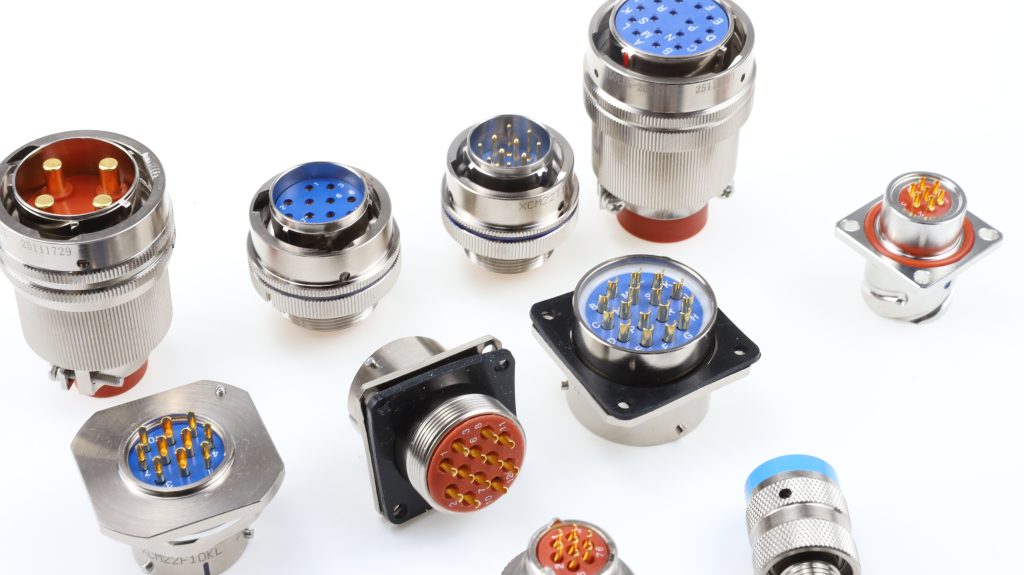
Key material choices for high-end applications include: titanium alloy, which boasts excellent resistance to extreme cold and high pressure, making it suitable for polar exploration equipment and aerospace applications; copper-chromium-zirconium alloy, which offers high electrical conductivity and mechanical strength, meeting the performance requirements of high-speed connectors in AI computing centers with signal transmission rates of up to 112 Gbps, aligning with the growth trend of China’s high-speed connector market valued at RMB 64.46 billion.
Connector Pin Plating Process Selection
Connector pins are typically subjected to metal plating to enhance their resistance to environmental degradation. In addition, the selection of pin plating materials directly determines the maximum mating cycle lifespan of the connector. For connectors requiring frequent mating and unmating, plating materials with higher hardness must be used. Currently, commercial plating materials available on the market can generally support a minimum of 10,000 mating cycles. In 2025, industry requirements for connector mating lifespan have been further elevated: data center connectors are required to achieve 100,000 mating cycles (the global IDC connector market is projected to reach USD 45 billion by 2030), while charging connectors for new energy vehicles need to support 50,000 mating cycles. High-end plating materials can accommodate at least 50,000 mating cycles, satisfying the demands of high-frequency mating applications.
The plating materials available for connector pins include:
Precious Metals: Tin, nickel, silver, gold, etc. In 2025, the application share of silver-based composite materials has increased to 45%. Silver-nickel-graphite plating exhibits excellent anti-weldability, making it suitable for arc protection in 800V high-voltage scenarios.
High-Performance Alloys: Tin alloys, nickel alloys, lead-free environmentally friendly tin-bismuth alloys, nickel-phosphorus alloys with 2x enhanced corrosion resistance, copper-chromium-zirconium alloys.
Innovative Plating Materials: Silver-zinc-oxide-indium materials, gradient-structured contact materials, Diamond-Like Carbon (DLC) coatings (with a friction coefficient as low as 0.08).
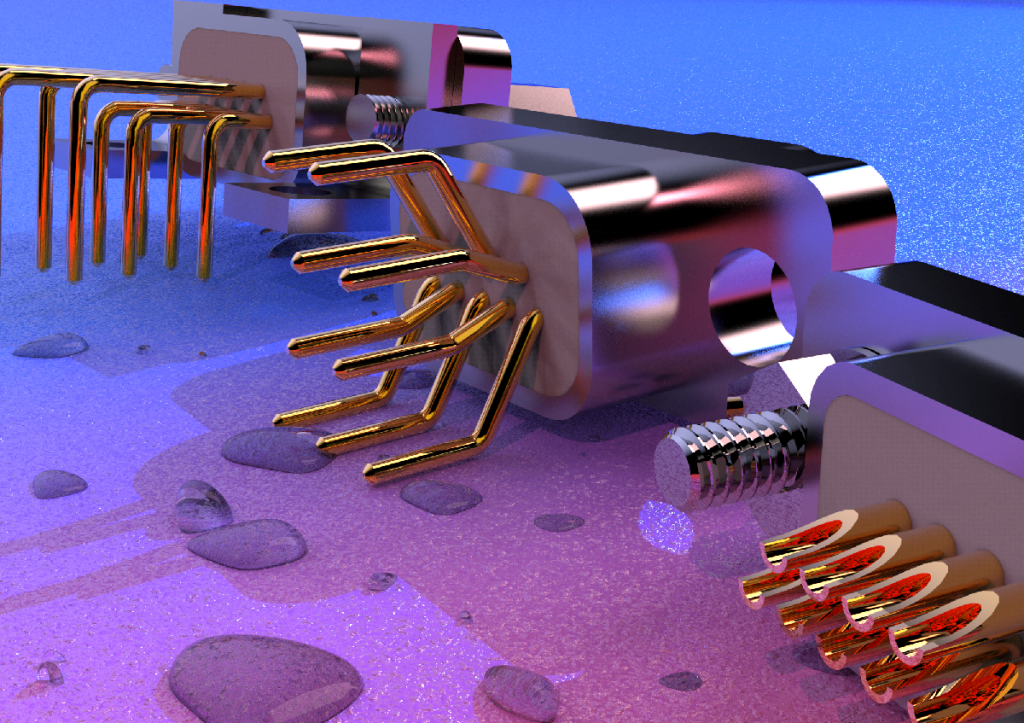
High-quality plating materials must satisfy two core criteria: first, they must provide stable and effective corrosion protection against corrosive substances that the connector housing may come into contact with; second, they must deliver a sufficiently hard contact surface for mating, minimizing wear during the insertion and extraction process. In 2025, the plating process has achieved two major technological breakthroughs: laser cladding coating technology now offers a thickness control precision of 1 μm, with arc erosion resistance three times higher than traditional processes; Atomic Layer Deposition (ALD) technology enables 2 nm-scale precious metal coating, reducing material costs by 40% while maintaining performance. Plating thickness is typically measured in microns, which is sufficient to support thousands to tens of thousands of mating cycles, and allows for direct soldering operations on device pins.
Plating process specifications for standard off-the-shelf connectors are clearly stated in product data sheets. For custom connectors, professional plating service providers can offer dedicated pin plating solutions for crimp-type cable assemblies, sockets, and plug connectors, particularly catering to the high arc resistance requirements (150 kAs) of 800V high-voltage platforms in new energy vehicles. Furthermore, the adoption of environmentally friendly processes has emerged as an industry trend. Vacuum infiltration processes are gradually replacing traditional electroplating methods, reducing wastewater discharge by 90% and limiting the content of harmful substances such as cadmium to below 10 ppm, complying with stringent environmental standards.
Key Considerations for Connector Housing Material Selection
Some electrical connectors require additional housings to provide enhanced environmental protection and prevent accidental disconnection of connection points. Connector housing materials primarily include plastics, metals, and rubber, with varying cost implications and manual assembly complexities associated with each type. In 2025, the focus of housing material selection is on upgrading IP protection ratings: industrial-grade connector housings are required to achieve a minimum IP67 rating, while high-voltage automotive connector housings need to meet the IP6K9K standard. These requirements are designed to match the protection needs of application scenarios including China’s 4.486 million 5G base stations and the 13.3% year-on-year growth in industrial robot output.
Certain housings are specifically designed for wire-to-wire connections, enhancing the stability of cable junctions; other housings are integral components of board-mounted or panel-mounted enclosures, ensuring the robustness and environmental resilience of connection points. In 2025, the application proportion of thermoplastic composite materials in housing manufacturing has increased significantly. Through continuous fiber reinforcement technology, these materials can achieve a temperature resistance of up to 200°C, with impact resistance 40% higher than traditional materials, and are fully recyclable, aligning with global dual-carbon goals and corporate ESG commitments. In terms of rubber sealing materials, Hydrogenated Nitrile Butadiene Rubber (HNBR) is gradually replacing traditional nitrile rubber, becoming the preferred choice for automotive connector housing sealing due to its superior oil resistance and high/low temperature tolerance.
The housing material directly determines the IP protection rating of the connector mating interface. Mating surfaces on equipment housings can achieve high-level IP protection through rubber sealing structures, effectively preventing the ingress of solid particles and liquids. Among these, IP6K9K-rated housings can withstand high-pressure and high-temperature water jet cleaning, making them fully suitable for applications such as automotive engine compartments and industrial cleaning equipment. This is also one of the hallmark features of high-reliability connectors. Professional connector manufacturers can assist customers in designing custom connector housings, ensuring compliance with the latest industry standards across multiple regions, and suitability for diverse applications including consumer electronics, industrial automation, and aerospace.
Regardless of the complex circuit board design challenges you may face, leveraging the professional expertise and mature service system of Shenzhen Suntron Aviation will enable you to efficiently deliver the integration and implementation of high-precision electronic components. With our profound technical expertise and customized service capabilities, we provide solid support for the R&D and production of various connectors and associated components. Only Shenzhen Suntron Aviation can deliver reliable, comprehensive solutions for projects of varying complexities across diverse application scenarios including consumer electronics, automotive electronics, industrial control, and aerospace.
Subscribe to our newsletter for the latest product updates and industry technology trends. To learn more about Shenzhen Suntron Aviation’s customized solutions, please contact our professional technical team for consultation.
.png)
-1.png)